September 25, 2026 Post by : Editorial Plant-Based Recipes
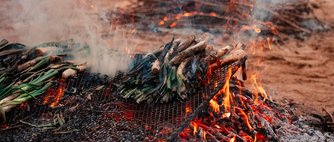
The Art of the Ember-Roasted Onion
Cassoulet is one of those dishes that invites argument. Every town in southwestern France claims its own version, and every version insists that the others are doing it wrong. The constants are white beans, a long slow cook, and a deep, savory flavor that comes from meat. Remove the meat, and you are left with a problem: how do you build that depth without the traditional building blocks?
The answer, I have found, is smoke, mushrooms, and time. Dried porcini give a meaty, forest-floor bass note. Smoked paprika and a touch of liquid smoke stand in for the bacon. And a long simmer, longer than you think necessary, lets the beans absorb everything and thicken the broth into something almost velvety. It is not cassoulet in the strictest sense. But it is close enough that a French friend once asked me for the recipe, which I took as a considerable compliment.
Building the Base
Start the night before by soaking a pound of dried cannellini or flageolet beans. The next day, drain them and set them aside. In a heavy Dutch oven or clay pot, sweat a large diced onion, two carrots, and three stalks of celery in olive oil until soft and beginning to color. Add four cloves of minced garlic, a tablespoon of tomato paste, and a generous teaspoon each of smoked paprika and dried thyme. Cook for another minute, until the paste darkens and the kitchen smells like a Sunday afternoon.
Now add the beans, a handful of dried porcini soaked in hot water and chopped, the soaking liquid strained, and enough vegetable stock to cover everything by two inches. Bring to a simmer, then transfer to a low oven, around 300 degrees, and let it go. And go. And go.
The Long Cook, and Why It Matters
Three hours is the minimum. Four is better. The beans should be completely tender, the broth should have reduced to a glossy, spoon-coating consistency, and the whole thing should taste like it has been cooking since yesterday. Stir it occasionally, and add more stock if it starts to look dry. Toward the end, taste and adjust the salt and acid. A splash of red wine vinegar at the finish is essential. It cuts through the richness and makes everything taste more like itself.
If you have a wood oven, this is the ideal dish to make after a baking session, when the oven has dropped to around 300 degrees and the residual heat is free. Cover the pot and slide it in. Check it every hour or so. The gentle, even heat of a cooling oven is exactly what a long bean stew wants.
Serve it with a piece of crusty bread, a green salad dressed sharply with mustard vinaigrette, and a glass of something red and rustic. It feeds a crowd, it improves the next day, and it freezes well. In the depths of January, when the windows are frosted and the woodpile is shrinking, there are few things I would rather have on the table.

Author

22 feb,2025
This incident opened my eyes to the value of Insurance in general, so I decided to examine my personal and business insurance.



Comment (3)
The payments are made directly from one person to another without passing through a central bank or clearing house.
22 feb,2025
ReplyBaking with Almond Flour: What Works and What Does Not
23 feb,2025
ReplyThe Slow Rise: Why Sourdough Belongs in Every Rustic Kitchen
23 feb,2025
Reply