September 28, 2026 Post by : Editorial Wood-Fired Techniques
Smoked Beets with Walnut and Orange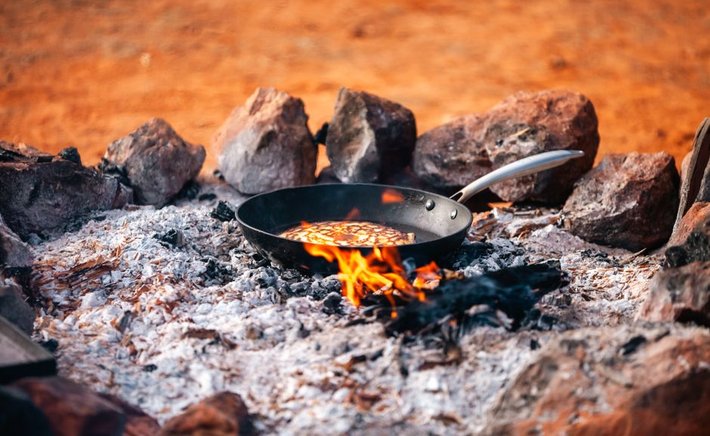
After every fire, there is ash. Most of us sweep it into a bin and forget it. But for most of human history, ash was a working ingredient in the kitchen. It leached into water to make lye for nixtamalizing corn. It was rubbed onto fish before drying. It was stirred into dough in regions where the soil was poor and the body needed minerals. The fact that we have largely forgotten this is a loss, and it is one that is easy to reverse.
I started cooking with ash almost by accident. I had been burning oak and almond wood in my oven for years, and one evening, on a whim, I dusted a few small potatoes with the fine white ash from the back of the oven before burying them in the coals. When I dug them out an hour later, the skins were blistered and faintly alkaline, and the flesh inside tasted sweeter and more mineral than any potato I had baked before. That was the beginning.
What Ash Actually Does
Wood ash is largely calcium carbonate, along with potassium, magnesium, and trace minerals. In small amounts, it raises the pH of whatever it touches, which is why it can make certain foods taste richer and more complex. It is also mildly abrasive, which makes it useful for cleaning root vegetables, though you should rinse them well afterward.
The trick is restraint. Ash is potent, and a little goes a long way. A pinch stirred into a pot of beans will soften them faster and add a subtle smokiness. A dusting on the surface of a flatbread before it goes into the oven will give the crust a faintly bitter, mineral edge that pairs beautifully with olive oil and herbs. But use too much and you will taste nothing else. Start with a quarter teaspoon and adjust from there.
Which Ash to Use, and Which to Avoid
Not all ash is equal. Ash from untreated hardwood, fruitwood, or nut wood is ideal. Avoid ash from charcoal briquettes, which often contain binders and additives, and from any wood that has been painted, stained, or chemically treated. If you are burning scrap lumber in your oven, do not cook with the ash. If you are burning clean oak, almond, apple, or cherry, you are in good shape.
Store your cooking ash in a small jar with a tight lid, and keep it dry. It will last indefinitely. I keep two jars in my kitchen: one fine ash sifted through a mesh strainer for finishing, and one coarser ash for leaching into water when I want to make a mild alkaline solution for boiling or soaking.
There is something satisfying about closing the loop this way, using every part of the fire rather than treating the leftover as trash. It is a small thing, but it changes how you think about the oven. The fire gives you heat, then coals, then ash, and each stage has its own use. Cooking this way is less a technique than a habit of attention, and attention, in the end, is what separates a good meal from a forgettable one.

Author
22 feb,2025
This incident opened my eyes to the value of Insurance in general, so I decided to examine my personal and business insurance.
Comment (3)
The payments are made directly from one person to another without passing through a central bank or clearing house.
22 feb,2025
ReplyFire-Roasted Tomato Sauce for the Freezer
23 feb,2025
ReplyBaking with Almond Flour: What Works and What Does Not
23 feb,2025
Reply