September 16, 2026 Post by : Editorial Wood-Fired Techniques
Baking with Almond Flour: What Works and What Does Not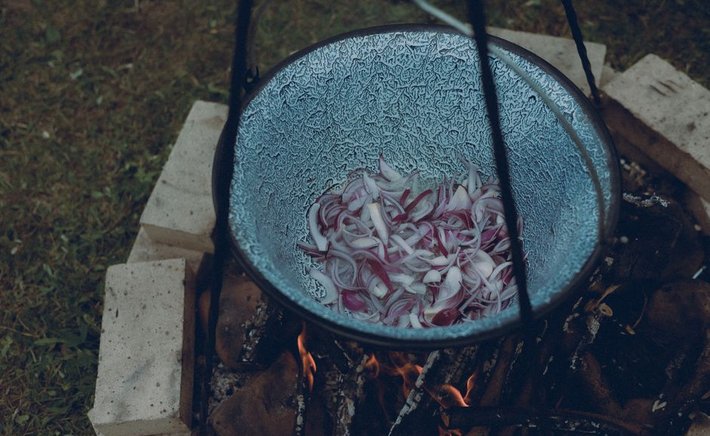
If you asked me to name the single most underrated technique in my kitchen, I would not hesitate. It is burying a whole onion in the embers of a fire and leaving it there until the outer layers have turned to ash and the inside has collapsed into something sweet and jammy. The transformation is total. The sharpness that makes raw onion overwhelming disappears entirely, replaced by a deep, mellow sweetness that tastes almost like caramel.
I learned this from a farmer at a market years ago, who sold me a bag of onions and told me, almost as an aside, that the only way she ever cooked them was in the ashes of her wood stove. I tried it that week and have been doing it ever since. It is the kind of technique that costs nothing, requires no equipment, and produces a result that would be impressive in a restaurant.
Choosing and Preparing the Onion
Any onion will work, but larger ones are easier to handle and give you more of the good interior. Yellow onions are classic, though red onions turn a striking ruby color and sweet onions become almost dessert-like. Leave the skin on. Do not trim the ends. The skin protects the flesh and steams it as it chars, and the ends keep the whole thing from falling apart.
Nestle the onion directly into a bed of hot coals, then cover it with more coals. The timing depends on the size of the onion and the heat of the fire. A large onion in a hot bed of coals will take about an hour. A smaller one might be done in forty minutes. You will know it is ready when the outer layers have blackened and the onion feels soft when you press it with tongs.
Using the Result
Let the onion cool until you can handle it, then peel away the charred outer layers. What remains is a soft, glossy bulb that you can use in any number of ways. I like to chop it and fold it into a bowl of warm white beans with olive oil and thyme. It is also excellent mashed into a vinaigrette, spread on flatbread with a little tahini, or stirred into a pot of soup at the last minute to add depth.
If you are already firing your oven for bread or pizza, this is a free addition. Toss a few onions into the coals while the oven heats, and by the time your dough is ready to bake, the onions will be done. It is a small act of economy, using the fire for more than one purpose, and it is exactly the kind of thinking that makes wood-fired cooking so satisfying. Nothing is wasted. Everything is used. The fire gives, and you receive, and the meal is better for it.

Author

22 feb,2025
This incident opened my eyes to the value of Insurance in general, so I decided to examine my personal and business insurance.


Comment (3)
The payments are made directly from one person to another without passing through a central bank or clearing house.
22 feb,2025
ReplyThe Slow Rise: Why Sourdough Belongs in Every Rustic Kitchen
23 feb,2025
ReplyCharred Cabbage with Smoked Paprika and Almond Cream
23 feb,2025
Reply