October 4, 2026 Post by : Editorial Wood-Fired Baking
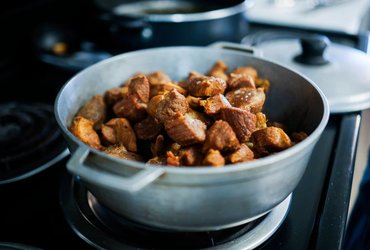
A Vegan Cassoulet for Cold Nights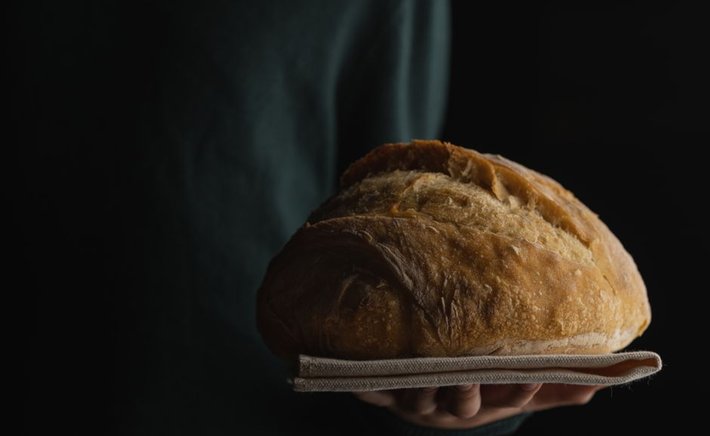
There is a particular hour of the morning, just before the sun clears the treeline, when a well-fed sourdough starter smells like something between yogurt and wet stone. If you have never kept a starter, that description may sound unappealing. If you have, you know it is the smell of possibility. The starter is awake, bubbling with a kind of patient urgency, and somewhere in the next six hours a loaf will take shape from nothing more than flour, water, salt, and time.
I came to sourdough the way a lot of people do: through a failed loaf. My first attempt was dense enough to serve as a doorstop, and I remember feeling personally insulted by it. I had followed the recipe. I had measured carefully. What I had not done was understand that bread is less a formula than a relationship. The wild yeast in a starter is a living colony, and it responds to warmth, feeding schedules, and neglect in ways that no instruction sheet can fully anticipate.
The Case for Going Slow
Commercial yeast is a marvel of consistency. It will raise a dough in ninety minutes with the reliability of a metronome. But that reliability comes at a cost. Fast fermentation develops carbon dioxide quickly while leaving the deeper flavors undeveloped. A slow rise, by contrast, gives enzymes time to break down starches into sugars, bacteria time to produce lactic and acetic acids, and the gluten time to relax into something extensible rather than tight. The result is a crumb that tastes of wheat rather than of yeast, and a crust that shatters instead of resisting.
In a wood-fired oven, this matters even more. The intense initial heat of a properly heated dome, often upwards of 700 degrees Fahrenheit at the floor, demands a dough that can withstand thermal shock without collapsing. A well-fermented sourdough has structure. It has a skin that has dried slightly during its final proof, and that skin becomes the blistered, mahogany crust that no home oven quite replicates. You are not just baking bread. You are participating in a process that predates written language.
Reading the Dough Instead of the Clock
The hardest lesson for a new baker is to stop watching the clock. A recipe that says "proof for four hours" is describing the baker's kitchen, not yours. If your kitchen is cold, the dough may need eight hours. If it is warm and humid, it may be ready in three. The dough itself will tell you: it will feel airy and slightly jiggly, it will have risen by roughly half again, and a gentle poke will leave an indentation that springs back slowly and incompletely.
I keep a small jar of starter beside my dough when I bake, so I can watch the two rise in tandem. When the jar has domed and just begun to fall, the dough is usually close behind. It is a small trick, but it has saved more loaves than any timer I have owned. Baking this way requires you to be present, and presence, it turns out, is most of what rustic cooking asks of us.
None of this is to say that quick breads have no place. They do, and I make them often. But there is a particular satisfaction in a loaf that took a day and a half to become itself, pulled from an oven that took two hours to heat, eaten warm with nothing but good butter and a pinch of salt. It is the kind of food that reminds you that patience is not a virtue so much as an ingredient.


Author

22 feb,2025
This incident opened my eyes to the value of Insurance in general, so I decided to examine my personal and business insurance.

Comment (3)
The payments are made directly from one person to another without passing through a central bank or clearing house.
22 feb,2025
ReplyThe Slow Rise: Why Sourdough Belongs in Every Rustic Kitchen
23 feb,2025
ReplyCharred Cabbage with Smoked Paprika and Almond Cream
23 feb,2025
Reply